
Is a Felt Fedora Too Warm for Mild Weather? A Practical Guide to Wearing Felt Between Seasons
When people think about a felt fedora hat, winter is probably the first season that comes to mind. Felt has a naturally dense texture, and its association with coats, boots and heavier clothing makes it seem like a hat designed exclusively for cold weather.
But mild weather is where the question becomes more interesting.
A cool morning can turn into a comfortable afternoon. A sunny day can feel warm in direct light but noticeably cooler in the shade. Add wind, changing temperatures and different levels of activity, and the idea that one hat belongs to one season starts to make less sense.
So, is a felt fedora too warm for mild weather?
Not necessarily. The answer depends less on the word “felt” and more on how the felt hat is made, how you wear it, and what the weather is actually doing.
Felt Is About More Than Warmth
It is easy to think of felt simply as an insulating material. In reality, a felt fedora does several things at once.
The material creates a physical barrier between your head and the surrounding air. The crown provides coverage, while the brim can reduce direct exposure to sunlight. Depending on the construction, the hat can also offer some protection from light wind.
This means a felt fedora is not simply adding heat. It is also helping create a more stable environment around your head.
That distinction matters during transitional weather.
If the temperature is comfortable but the wind is cool, a lightweight felt fedora can actually feel more appropriate than a completely open summer hat. The same principle applies during spring and fall, when outdoor conditions can change considerably over several hours.
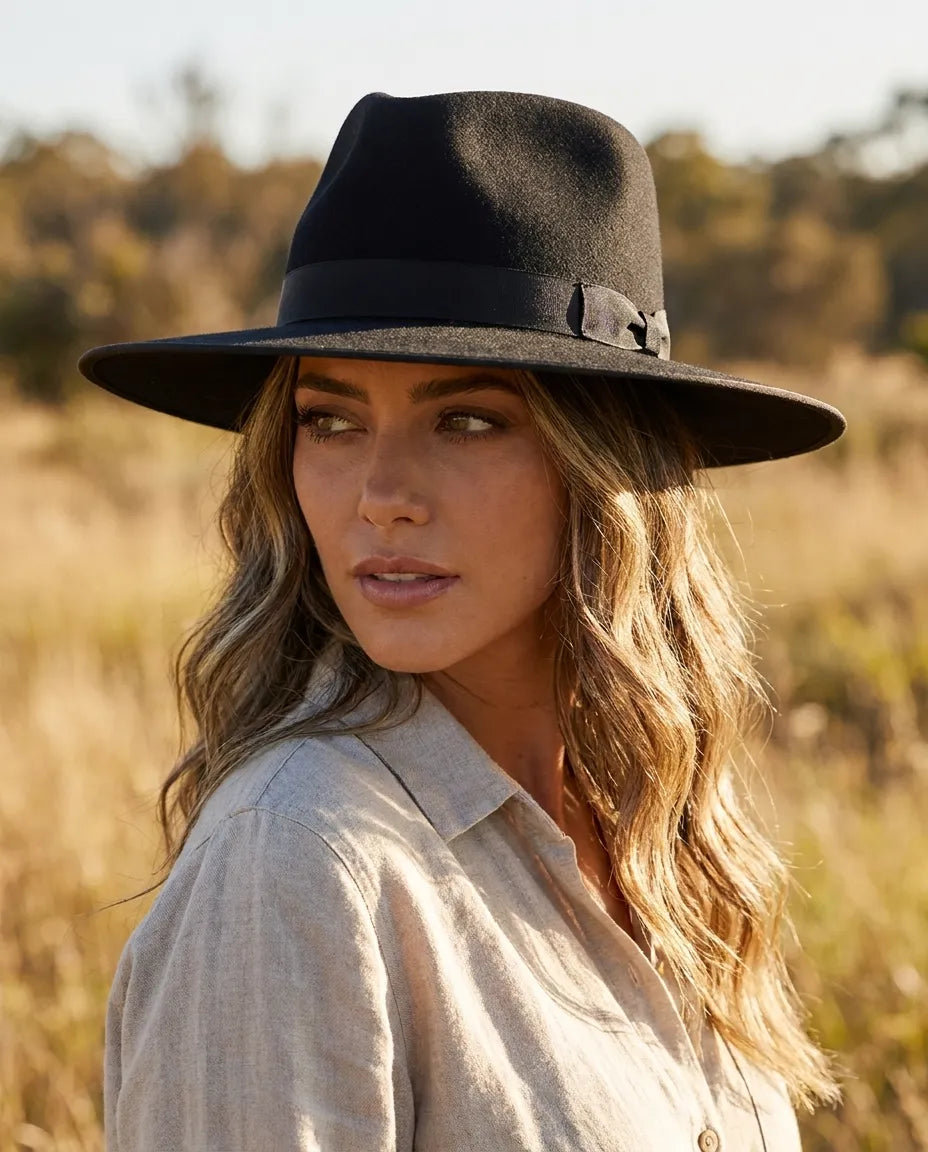
The Real Question Is: How Warm Is the Felt?
Not every felt fedora has the same thermal feel.
A lightweight wool felt hat can be considerably different from a dense, heavily constructed winter fedora. The thickness and density of the felt, lining, sweatband and overall construction all contribute to how warm the hat feels.
For mild weather, a lighter construction generally makes more sense.
You may also notice that a structured fedora with a substantial lining feels warmer than a relatively lightweight unlined or lightly lined design, even if both are made from wool felt.
This is why choosing a felt fedora for spring or fall should involve more than checking the material label.
Crown Height Can Change the Wearing Experience
The crown is another detail that is rarely discussed when people talk about comfort.
A taller crown creates more space around the head, while a lower crown sits closer to it. Neither is automatically cooler or warmer in every situation, but the internal volume and construction can influence how the hat feels during extended wear.
A well-fitted crown should not press tightly against the head.
If a felt fedora feels uncomfortable after only a short period, the problem may not be the weather. The size, sweatband or shape of the hat may simply be unsuitable for you.
That is an important distinction when evaluating whether a hat is “too warm.”
The Brim Does More Than Complete the Look
The brim is often treated as a purely aesthetic feature, but it has a practical role too.
A wider felt fedora brim can provide additional shade around the face and reduce direct sunlight. This can be useful on bright days when the air temperature itself is not particularly high.
At the same time, a wide brim does not magically turn a felt hat into a summer hat. If the material is heavy and the weather is hot, the additional coverage may not compensate for the reduced breathability.
The best combination for mild conditions is therefore often moderate coverage with lightweight construction.
Mild Weather Is Not the Same as Hot Weather
This is probably the most important distinction.
There is a large difference between a pleasant spring afternoon and a hot summer day.
If you are walking through a city in comfortable temperatures, attending an outdoor event, travelling, or spending an evening outside, a felt fedora can be entirely reasonable.
If you are standing in direct sun on a very hot and humid afternoon, a breathable straw fedora will generally make more sense.
Think about the role of the hat:
Felt works particularly well when you want protection, structure and warmth without the bulk of a heavy winter hat.
Straw works particularly well when airflow and heat management become the priority.
Neither material is universally better.
Why Felt Fedora Hats Work So Well in Spring and Fall
The transitional seasons are arguably where felt fedoras make the most sense.
In early spring, mornings can still have a noticeable chill even when afternoons become mild. In fall, the opposite happens: daytime temperatures may remain comfortable while evenings become significantly cooler.
This is where a felt fedora fills a useful gap between summer and winter headwear.
It also works naturally with transitional clothing.
Think lightweight wool trousers, denim, overshirts, knitwear, cotton jackets, trench coats or an unstructured blazer. A felt fedora can visually connect these pieces without making the outfit feel as heavy as a full winter look.
That is one reason the style remains relevant outside the traditional cold-weather season.
What About a Sunny Mild Day?
Sunshine changes the equation.
A mild day can feel substantially warmer under direct sunlight than the thermometer suggests. A hat with a brim can reduce the amount of direct sun reaching your face and head, which may make outdoor time more comfortable.
However, sunlight also heats dark-colored materials.
If you are particularly sensitive to heat, lighter-colored felt can be worth considering for bright transitional days. Beige, taupe, light grey and other muted shades can create a visually lighter appearance as well as a different experience under strong sunlight.
The important point is not to treat color as a replacement for breathability. A light-colored heavy felt hat is still a heavy felt hat.
Can You Wear a Felt Fedora All Day?
Yes, but the conditions matter.
For an all-day outing, comfort becomes more important than appearance alone. A hat that looks excellent for a photograph but feels tight after two hours is not a practical everyday choice.
Pay attention to:
- Hat size and fit
- Felt weight
- Lining construction
- Sweatband comfort
- Crown shape
- Amount of direct sunlight
- Outdoor temperature
- Humidity
- How physically active you will be
A person walking slowly through town may be perfectly comfortable in a felt fedora at a temperature where someone hiking or cycling would prefer a lighter, more breathable hat.
The activity matters just as much as the forecast.
Felt Fedora or Straw Fedora for Mild Weather?
The decision does not need to be complicated.
Choose felt when you want a more substantial texture, structured silhouette, some protection from cool air and a style that works naturally with transitional clothing.
Choose straw when temperatures are moving toward summer levels and airflow becomes more important than warmth or structure.
There is also a useful middle ground: a lightweight felt fedora for cooler conditions and a straw fedora for warmer days.
Rather than asking which material is better, ask which environment the hat needs to perform in.
What If the Weather Changes During the Day?
This is where a felt fedora can be surprisingly practical.
Imagine leaving home on a cool morning wearing jeans, a shirt and a light jacket. By midday, the jacket comes off, but the air remains comfortable. Later, the temperature drops again as the sun disappears.
A felt fedora fits naturally into this type of day because it does not look out of place with either lighter or heavier layers.
This makes it particularly useful for travel, outdoor markets, casual dinners, countryside walks and other situations where you cannot control the temperature throughout the day.
When Is a Felt Fedora Probably Too Warm?
There is a point where switching materials simply makes more sense.
A felt fedora is probably not your best choice when you are dealing with high heat, high humidity, prolonged direct sunlight or strenuous physical activity.
In these situations, the density of felt becomes a disadvantage. A breathable straw hat, Panama-style hat or another lightweight woven design can allow substantially more airflow.
There is no reason to force a felt fedora into a climate it was not designed to handle.
Good hat styling is partly about knowing when to change materials.
The Bottom Line
A felt fedora hat is not automatically too warm for mild weather.
The better question is whether the specific hat's weight and construction suit the conditions in which you plan to wear it. Lightweight felt can be an excellent choice for spring, fall, cool mornings, mild afternoons and evenings when you want more structure and coverage than a summer hat provides.
The key is balance.
When the weather is cool enough to appreciate a little insulation but not cold enough to require heavy winter headwear, a felt fedora occupies a useful middle ground. When temperatures become genuinely hot, breathable straw becomes the more logical choice.
In other words, felt does not belong to winter alone. It belongs wherever its material, construction and styling make sense for the weather.


